


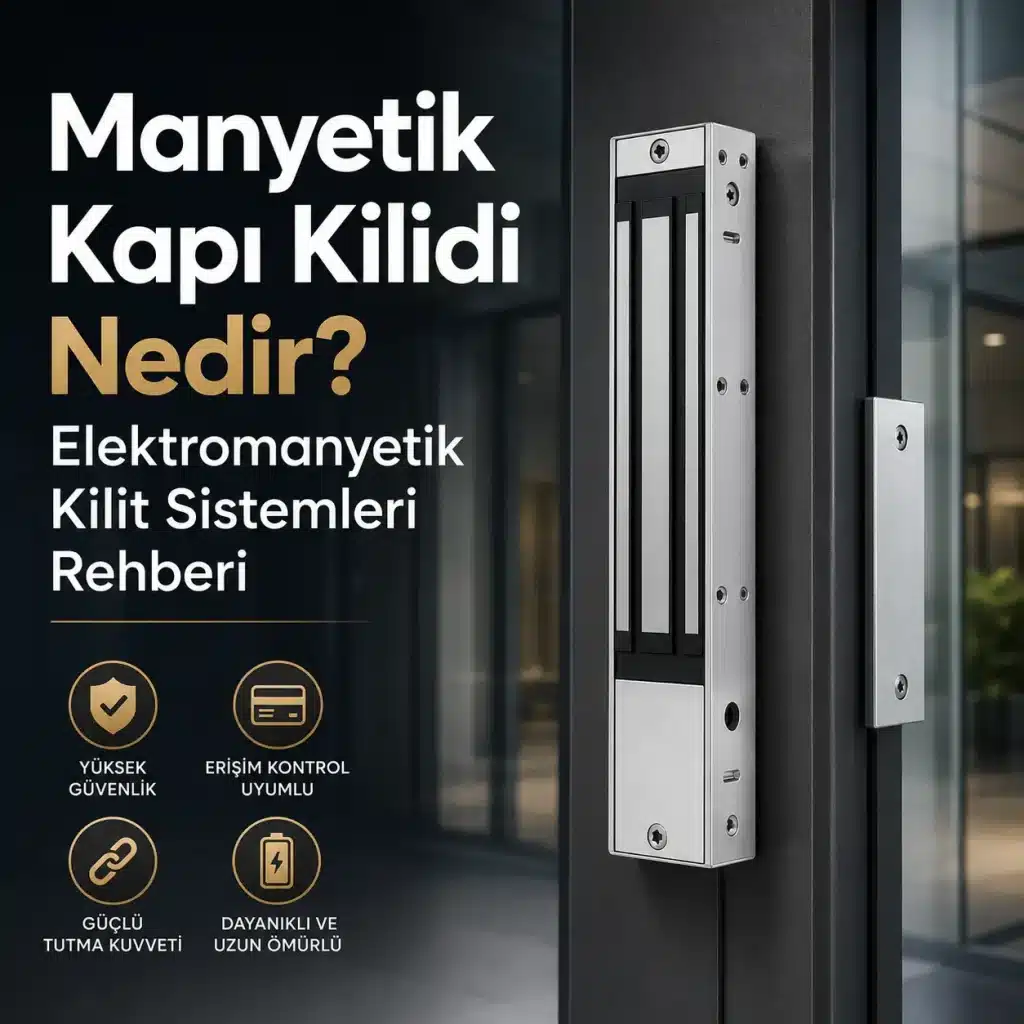
With advances in security technology, door locking solutions have become smarter and more secure. Magnetic door locks, which are frequently used in businesses, offices, educational institutions, and commercial buildings, are emerging as a leading alternative to traditional mechanical locks. Operating using electromagnetic force, these systems are now widely used today thanks to their high security levels and compatibility with access control systems.
In this article, you’ll find detailed information about what a magnetic door lock is, how it works, what types are available, and in which settings it is commonly used.
What Is a Magnetic Door Lock?
Magnetic door lock, is a security system that uses electrical energy to keep the door locked. Also known as electromagnetic door locks, these systems create a strong magnetic force between an electromagnet installed in the door frame and a metal plate mounted on the door leaf. This magnetic force keeps the door closed and prevents unauthorized access.
When the power is cut off, the attractive force generated by the electromagnet disappears, and the door can be opened. For this reason, magnetic locks are typically used in conjunction with card-based access systems, keypad locks, fingerprint readers, and smart access solutions.
How Does an Electromagnetic Door Lock Work?
The operating principle of electromagnetic door locks is quite simple. When power is supplied to the system, the electromagnet activates and strongly attracts the metal plate opposite it. This force prevents the door from opening. When the user swipes their card, enters the correct code, or undergoes authorized access verification, the system briefly cuts off the power and allows the door to open.
Depending on the model used, electromagnetic locks may have different holding forces. While lower holding forces are sufficient for small office doors, stronger models are preferred in high-traffic areas and areas with high security requirements.
Types of Magnetic Door Locks
Magnetic door locks are manufactured in various types depending on their intended use and installation methods. The most commonly used models are surface-mounted electromagnetic locks. These systems are mounted directly onto the door and door frame and offer the advantage of easy installation. Thanks to their durable construction, they are preferred for both new projects and existing doors.
Flush-mounted electromagnetic locks, on the other hand, are installed inside the door and are therefore not visible from the outside. Frequently chosen for projects that call for a more aesthetic appearance, these models blend seamlessly with modern architectural designs.
There are also special magnetic lock systems designed for glass doors. Magnetic locks for glass doors—which are used primarily at the entrances to stores, shopping centers, and offices—are widely preferred because they combine security and aesthetics.
Are a Magnetic Door Lock and an Electromagnetic Lock the Same Thing?
In everyday use, the terms “magnetic door lock,” “magnetic door latch,” and “electromagnetic door lock” are often used interchangeably. However, from a technical perspective, there are some differences. While simple magnetic door holders merely help keep the door closed, electromagnetic door locks generate a high holding force for security purposes and can work in conjunction with access control systems.
For this reason, systems used in professional security applications are generally classified as electromagnetic locks.
Advantages of Magnetic Door Locks
Magnetic door locks One of their most important advantages is that they provide a high level of security. By reducing the need for traditional keys, they can minimize the risk of unauthorized access. In addition, they can be integrated with a variety of access technologies, such as card-based access systems, keypad locks, fingerprint readers, and mobile apps.
Because there are few mechanical parts, wear and tear rates are low. This contributes to the long service life of the systems. The fact that they offer quick and convenient access, particularly in facilities with heavy foot traffic, is also among their key advantages.
Disadvantages of Magnetic Door Locks
Although magnetic door locks offer many advantages, they also have certain limitations. These systems require electrical power to operate. Therefore, it is important to plan for an appropriate infrastructure to handle power outages. Depending on the model used, the door’s behavior may vary in the event of a power outage.
In addition, initial installation costs may be higher than those of standard mechanical locks. Professional installation is recommended to ensure maximum performance. For this reason, the intended use and security requirements should be carefully evaluated when selecting a product.
Where Are Magnetic Door Locks Used?
Magnetic door locks are used in a wide variety of settings today. While they help control staff access in offices, they ensure that only authorized personnel can access specific areas in hospitals. They are used in educational institutions to enhance student and staff safety, and they play a key role in securing staff areas in hotels.
Electromagnetic locks, which can be used in conjunction with card-based or PIN-based access systems at apartment building and gated community entrances, are also widely used in stores and commercial establishments. In particular, their ability to provide security without compromising the aesthetic appeal of areas with glass doors stands out as a significant advantage.
The Difference Between Smart Door Locks and Magnetic Locks
Although magnetic door locks and smart door locks serve similar purposes, they differ in how they operate. While electromagnetic locks typically function as part of an access control system, smart door locks can perform user authentication on their own.
Today, many smart door lock models offer advanced features such as QR codes, passcodes, mobile apps, or temporary access permissions. For this reason, while smart door locks may be a more practical solution for homes, apartments, and small businesses, electromagnetic lock systems are often preferred in commercial buildings with high foot traffic.
Conclusion
Magnetic door lock systems play a significant role among modern security solutions. Thanks to their electromagnetic operating principle, these systems provide robust protection and can be used in conjunction with card-based access, PIN-based access, and biometric authentication technologies. They enhance security while simplifying access management, particularly in high-traffic areas such as offices, hospitals, educational institutions, and commercial establishments.
When selecting the right magnetic door lock, the type of door, frequency of use, integration requirements, and security expectations should be taken into account. For homes and small businesses, smart door locks that support QR codes, passcodes, or mobile apps can be considered a more user-friendly and flexible alternative.


