


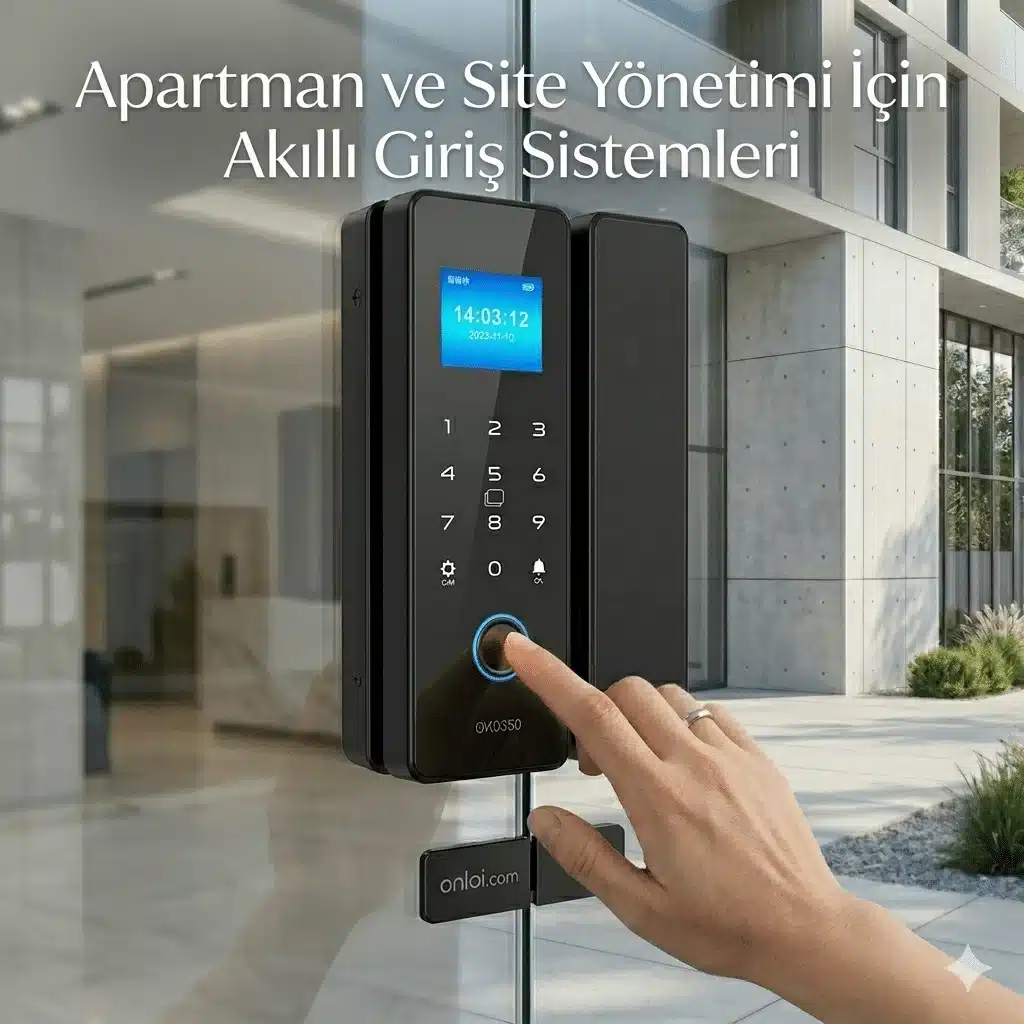
Apartment or complex managers have surely faced this question at least once: Are the doors secure? Who entered and when? Can someone without a key get in? These questions used to remain unanswered. Today, however smart entry systemsoffers a centralized and traceable solution to all of these questions.
In this guide, we take a detailed look at smart access systems designed for apartment and complex management, how they work, how much they cost and what type of building they are suitable for.
Why is the Traditional Apartment Door System Falling Short?
Most apartment buildings still use a circulator lock or a simple intercom system. Here are the main problems with these systems:
- When the door open button is accidentally pressed on the apartment intercom, the door remains open until an intruder enters. This means opening the door to a burglar.
- Keys can be copied. Who carries a copy is unknown.
- When the door hydraulics are slowed down, the traditional corkscrew lock gets caught in the checkers and the door does not close completely.
- There is no record of who entered and when.
- The manager cannot control the key holders in the building.
Smart entry system solves all of these problems with a single infrastructure.
Key Components of a Smart Entry System for Apartment Buildings
1. Smart Door Lock
Locking mechanism with electronic control card, mounted in place of a tumbler or magnetic lock. When it detects an unauthorized entry attempt, the door locks automatically within 10 seconds. The same time period applies when the door open button is pressed from the intercom in the apartment.
2. Authentication Unit
Residents open the door in one of the following ways:
- RFID card or chip: The most common method. Each resident's card or chip is registered in the system. The door opens when the chip is brought 2-3 cm closer to the reader.
- PIN password: Can be used alongside the card or on its own.
- Fingerprint In buildings requiring higher security, it is mounted inside the cylinder or above the door.
- Mobile application: With Bluetooth or NFC, the phone acts as a key.
3. Management Software
Centralized management panel for all units. The administrator is through this software:
- Adds/removes new residents or staff
- Defines the validity period of the card (automatic cancellation upon tenant exit)
- Displays entry-exit history records
- Generates a one-time temporary password for the visitor
4. Diaphone (Video Intercom) Integration
Visitors introduce themselves at the door, residents make video calls on their screens and open the door remotely with a single button. This can also be done via a smartphone app, so you can greet your guest even when you are out and about.
5. Power Backup
In the event of a power failure, a backup power supply powered by a 12V battery keeps the system running. Thus, power failure = the door does not remain open.
Access Control in Site Management: Larger Scale
The need is more complex in mass housing, villa sites or mixed-use projects. Not only the building entrance gate, but also dozens of different points such as parking lot barriers, swimming pool entrance, gymnasium gate, technical service areas have to be managed.
At this scale, the central access control system comes into play, while in some product models :
- Instant data communication over TCP/IP: All doors are connected to the central server. When a card is swiped, the record is in the system in 0.1 seconds.
- PDKS (Personnel Attendance Control System) integration: Shift tracking for security guards, gardener and technical team.
- Visitor management: A guest invitation is sent via QR code; the visitor scans the QR code at the door and passes through, access closes automatically when the time expires.
- Alarm integration: In case of an unauthorized opening attempt, the security team and site management are immediately alerted.
Frequently Asked Questions
How long does it take to install a smart apartment lock? For a single building entrance, installation is usually completed in half a day to one day. Site-scale projects can take several days, including infrastructure cabling.
Is it compatible with my existing intercom system? Most smart lock systems integrate with existing 2-wire or 4-wire intercom infrastructure. Onloi products are designed compatible with various intercom brands and standards. You can get support from Onloi technical team for the final decision.
Is it difficult to cancel the old card when the resident moves out? With a few clicks in the administration panel, the relevant card is deauthorized. You don't even need to retrieve the physical card; it becomes unauthorized.
Will the system work without internet? RFID-based systems work through local memory; the door opens even if the internet connection is lost. Connection is required for remote management and notifications.
A Realistic Assessment of Cost
Smart entry system The cost varies considerably depending on the size of the building, the quality of the selected hardware and the state of the infrastructure. However, the following perspective can be instructive: When the costs of key management, duplicate key expense, lock replacement after security breach and security personnel costs are added up, the smart system pays for itself within 2 years on average in most buildings. In addition, increased perception of security directly affects building value and tenant/buyer attractiveness.
Smart entry systems are no longer a luxury but a practical necessity in apartment and complex management. Entry-exit registration, centralized card management and visitor control both reduce the workload of the manager and meet the security demands of the residents.
To discover the best smart entry system solution for your building or site Review Onloi access control products and contact our team.


