


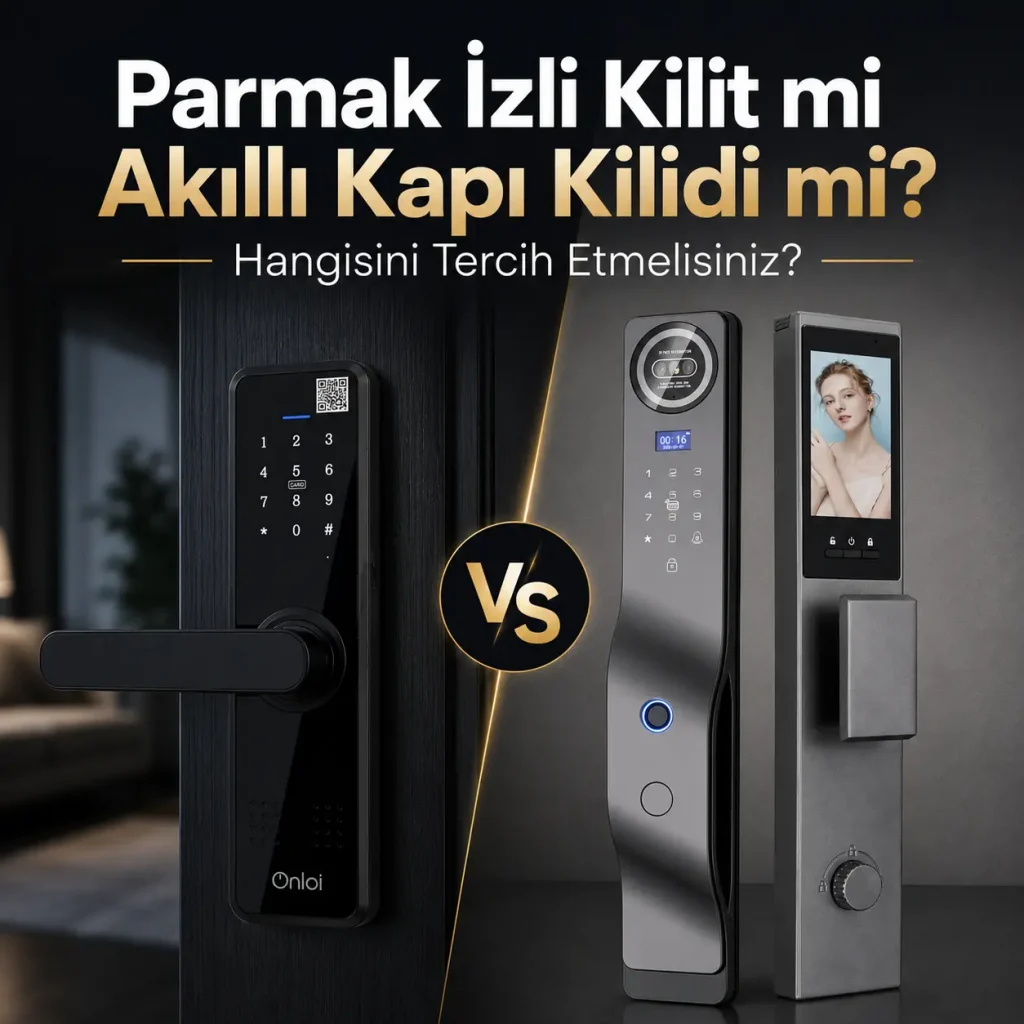
With advances in security technology, traditional key-based locks have begun to be replaced by more modern and convenient solutions. Fingerprint locks and smart door locks are becoming increasingly popular, particularly in homes, offices, apartment buildings, and short-term rental properties. However, many users face the same dilemma when making a purchase: Should they choose a fingerprint lock or a smart door lock?
In this article, we will take a detailed look at the differences between the two systems, their advantages, and the use cases for which they are best suited.
What Is a Fingerprint Lock?
Fingerprint lock, is an electronic lock system that uses biometric authentication to allow users to open the door. Fingerprints previously registered with the system are stored in memory, and the authentication process is carried out when the user touches the sensor. When the fingerprint matches, the door opens.
These systems reduce the need to carry physical keys while also making it more difficult for unauthorized individuals to gain access. Today, many fingerprint lock models also offer additional access methods, such as PIN codes and card access.
What is a Smart Door Lock?
Smart door lock, is an advanced security system that uses electronic access technologies to allow the door to be unlocked in various ways. Although some models offer fingerprint recognition, smart door locks are not limited to biometric authentication alone.
Modern smart door locks can offer features such as QR codes, PINs, mobile apps, temporary access codes, card-based access systems, and remote management. This allows users to manage door access more flexibly.
What Is the Difference Between a Fingerprint Lock and a Smart Door Lock?
While fingerprint locks primarily focus on biometric authentication, smart door locks offer multiple access options. The availability of alternative methods—such as a PIN, QR code, or mobile app—in addition to the fingerprint reader significantly enhances the user experience.
For example, in a system that relies solely on fingerprint recognition, access issues may arise if the sensor is dirty, the finger is wet, or the user’s fingerprint cannot be read. With smart door locks, however, users can gain access to the door using various options thanks to alternative entry methods.
For this reason, many manufacturers today are turning to smart lock solutions that offer multi-factor authentication instead of door locks with just a fingerprint reader.
Which One Is Better in Terms of Security?
From a security perspective, both systems offer significant advantages over traditional key-based locks. Since user authentication in fingerprint locks is based on biometric data, the risk of a key being duplicated is eliminated.
Smart door locks, on the other hand, offer a wider range of security features. Users can define different access permissions, create temporary codes, or grant access to specific individuals for specific periods of time. Some advanced models allow users to view access logs and utilize remote management features.
For this reason, smart door locks offer more comprehensive security management, especially in areas where multiple people come and go.
Comparison in Terms of Ease of Use
Fingerprint locks are very convenient to use. All the user has to do is touch the sensor. However, the fact that a fingerprint is the system’s only method of access can be a disadvantage in some situations.
Smart door locks, on the other hand, can adapt to different user needs. While the homeowner can manage the door through a mobile app, family members can use a passcode, temporary access codes can be created for guests, or QR codes can be assigned to employees. This flexibility offers a significant advantage, especially in areas requiring heavy use.
Which Is More Suitable for Apartments and Houses?
Both systems can be used in standard residential buildings. However, today’s users expect more than just the ability to open a door. Features such as remote access management, guest identification, temporary password generation, and alternative entry methods are becoming increasingly important.
For this reason, smart door locks are becoming increasingly popular in new-generation residential projects and for individual use. Multiple access options are particularly convenient in apartments used for short-term rentals and in homes with heavy visitor traffic.
Which One Is Better for Businesses?
Access management can become more complex in offices, stores, clinics, and commercial establishments. It is important to track staff entry and exit, grant authorization for specific areas, and update access permissions as needed.
Smart door locks offer more advantages for these types of needs. They provide flexible access for employees and visitors through various methods, such as QR codes, passcodes, and mobile access. They also reduce the need to manage physical keys.
What Should You Consider When Choosing a Smart Door Lock?
Before purchasing a smart door lock, you should evaluate the access options, security features, and use cases the product offers. In addition to fingerprint recognition, the availability of alternative access methods—such as a passcode, QR code, or mobile app—can provide significant advantages in everyday use.
In addition, the fact that the product is made of durable materials, is easy to use, and meets the required safety standards are among the factors that should be considered during the selection process.
Conclusion
While fingerprint locks offer a secure and convenient method of access, smart door locks provide a much more comprehensive user experience. Since users today require different access methods, smart door locks—which combine options such as QR codes, passcodes, and mobile access—are increasingly preferred over door locks that rely solely on fingerprint readers.
Whether you’re looking for a long-term solution for your home, office, or business, smart door locks with multiple authentication options can offer greater flexibility in terms of both ease of use and access management.


